International Arbitration in Turkey: Istanbul’s Growing Importance in Global Dispute Resolution An Interview with Dr. Arzu Ongur on International Arbitration, Cross-Border Disputes and Türkiye’s Expanding Role in International Business As…
An Interview with Dr. Arzu Ongur on International Arbitration, Cross-Border Disputes and Türkiye’s Expanding Role in International Business
As international business relationships become more complex, companies and investors increasingly need effective mechanisms for resolving disputes that cross national borders. In this environment, international arbitration in Turkey has become an increasingly relevant subject for businesses involved in international trade, investment and commercial transactions.
Türkiye occupies a distinctive geographical position between Europe, Asia and the Middle East, while maintaining strong commercial connections with the Caucasus and Central Asia. This position gives the country significant potential in the field of international dispute resolution.
Istanbul, as Türkiye’s largest commercial centre and one of the region’s most internationally connected cities, is also attracting greater attention in discussions about international arbitration and cross-border dispute resolution.
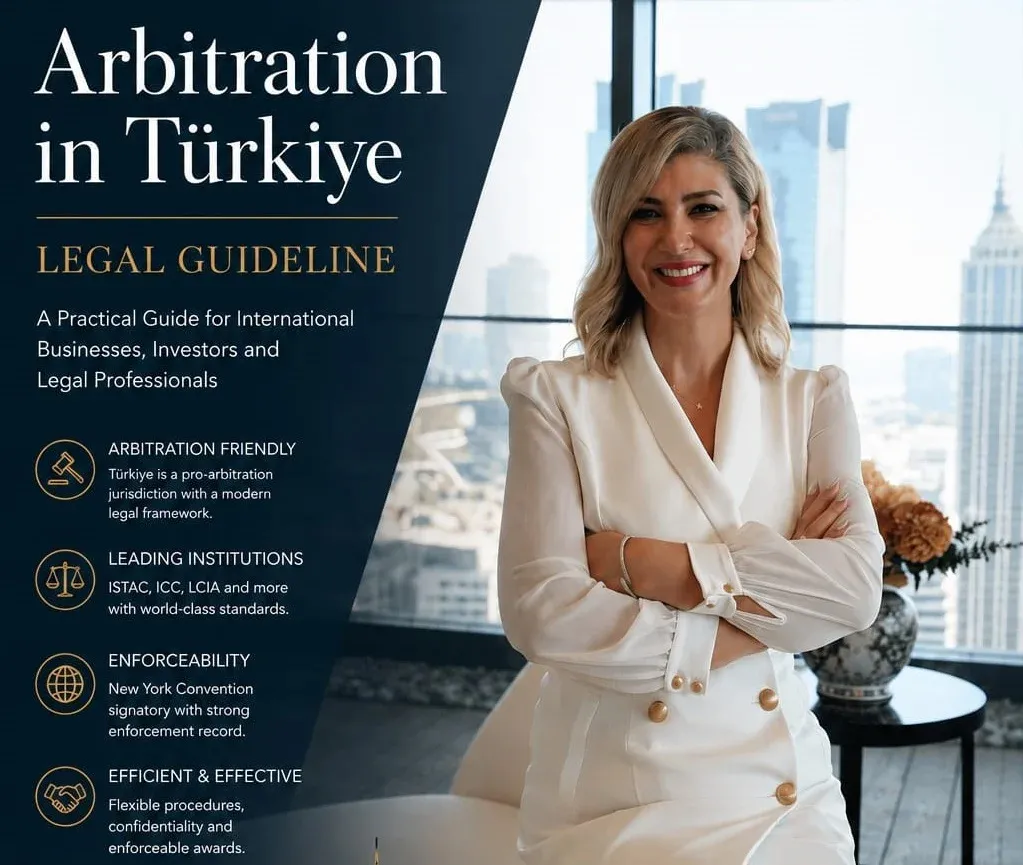
In this interview, Dr. Arzu Ongur, Founder and Managing Partner of ONGUR & PARTNERS International Law Office, discusses her professional background, the development of international arbitration in Türkiye, the importance of Istanbul for international disputes and the skills required from lawyers working with international clients.
Dr. Ongur, could you begin by telling us about your professional and academic background?
My professional journey has been shaped, from its earliest stages, by international law, cross-border commercial relations, foreign investment and international dispute resolution.
I have always viewed law as more than a collection of legal rules. It is also an institutional framework through which investments, commercial relationships and interactions between states, companies and private parties are structured.
This understanding has influenced both my academic career and my approach to legal practice.
I have never regarded academic scholarship and legal practice as entirely separate fields. In my view, they complement each other and contribute to a more comprehensive understanding of international legal problems.
Following my graduation from Ankara University Faculty of Law, I pursued postgraduate studies in Italy, including at the University of Bologna, and undertook further studies in European Union law at the Collegio Europeo di Parma. I subsequently completed my Ph.D. at Ankara University, focusing academically on competition law.
My interest in dispute resolution also led me to undertake specialised training in alternative dispute resolution, international arbitration and arbitral decision-making in the United States and the United Kingdom.
These experiences helped shape my understanding of how international arbitration should be approached.
A lawyer involved in an international arbitration should be able to analyse a dispute from the perspective of both legal counsel and the arbitral tribunal. Understanding how arbitrators may evaluate evidence, contractual provisions and competing legal arguments is an essential part of effective arbitration strategy.
In an international arbitration proceeding, substantive legal arguments are obviously fundamental. Nevertheless, successful representation requires a much broader approach.
Procedural strategy, evidence management, expert material, technical documentation and the presentation of complicated commercial issues can all influence the way a dispute is understood.
Cross-border disputes often involve several contracts, multiple parties and different legal systems. They may also involve significant financial and technical information.
For an international arbitration lawyer, the challenge is therefore not simply to identify the applicable law. It is also to establish a coherent legal and factual framework through which the tribunal can understand the dispute.
This is one of the reasons why arbitration strategy should be considered at an early stage of an international transaction.
Companies entering into cross-border agreements should carefully evaluate their dispute resolution clauses before signing the contract. Decisions concerning the seat of arbitration, applicable rules, governing law and institutional framework can become highly significant if a dispute later develops.
Italy has also occupied an important place in my academic and professional life.
My education there, together with the professional relationships I have developed over the years, gave me the opportunity to understand different legal systems as well as the commercial environments in which international investments take place.
Turkey–Italy commercial relations, international investments and the legal structuring of cross-border transactions remain important aspects of my professional work.
Working across different legal and commercial cultures demonstrates the importance of understanding not only legislation but also the practical expectations of international businesses.
International arbitration and alternative dispute resolution constitute a substantial part of my practice. My institutional involvement in the field, including my work within the Turkish Bar Association and its arbitration framework, complements the international dispute resolution matters handled in private practice.
When establishing ONGUR & PARTNERS ankara law firm, my objective was to create a legal practice that would be deeply grounded in Turkish law while also being capable of addressing international transactions and disputes involving different jurisdictions.
For an istanbul law firm advising international clients, knowledge of Turkish law is essential, but it is only the foundation.
International businesses may require legal advice concerning foreign investment, commercial agreements, corporate structures, regulatory matters and international dispute resolution.
The ability to understand how these areas interact is particularly important when advising companies whose operations extend beyond a single jurisdiction.
Istanbul has several characteristics that make it relevant to discussions about the future of international arbitration in Turkey.
The city has historically functioned as a bridge between different commercial regions. Today, it remains an important centre for trade, investment, finance and international business.
Its location provides access to markets across Europe, Asia and the Middle East, while Türkiye’s broader economic relationships extend into the Caucasus and Central Asia.
For companies involved in cross-border transactions, these connections make Istanbul an increasingly relevant location to consider when evaluating international dispute resolution options.
The continued development of legal expertise and arbitration infrastructure can further support Istanbul’s position as a regional centre for international commercial disputes.
However, selecting Istanbul as a seat of arbitration involves more than geographical convenience. Parties should consider the applicable legal framework, procedural rules, enforceability, the characteristics of the arbitration institution and the practical requirements of the dispute.
Institutional arbitration provides parties with an established framework for conducting arbitration proceedings and can offer administrative support throughout the process.
This structure can be particularly useful in complex international disputes involving substantial documentation, multiple parties or technically complicated issues.
Nevertheless, the selection of an institution represents only one part of an effective arbitration strategy.
The wording of the arbitration agreement, selection of arbitrators, procedural planning, evidence management and presentation of the legal case can all influence the effectiveness of the proceedings.
For this reason, businesses should not treat arbitration clauses as standard contractual provisions.
They should instead be considered as part of the broader risk-management strategy of an international transaction.
International commercial disputes are becoming increasingly sophisticated.
The next generation of international arbitration lawyers will therefore need to combine legal expertise with a broader understanding of international commerce and business operations.
Knowledge of investment structures, financial documents, technical evidence, digital information and commercial negotiations can be increasingly important in complex arbitration proceedings.
Communication skills are equally significant.
A lawyer may need to explain complicated legal and commercial issues to clients, arbitrators, experts and other participants in a manner that is both precise and accessible.
From my perspective, effective arbitration practice requires rigorous legal analysis, strategic thinking and commercial awareness.
A successful legal strategy should address the legal issues of a dispute while remaining connected to the client’s broader commercial objectives.
Türkiye’s growing participation in international trade and foreign investment is likely to generate continued demand for sophisticated dispute resolution services.
International investors may encounter disputes involving commercial contracts, corporate relationships, investment structures, construction projects, financing arrangements or regulatory matters.
In such circumstances, understanding the available dispute resolution mechanisms in Turkey can be an important component of legal risk management.
Legal advice should ideally be obtained before a transaction is completed. Reviewing contractual provisions and dispute resolution clauses at the negotiation stage can provide businesses with greater clarity about how potential future disputes will be handled.
This becomes particularly important where a transaction involves several jurisdictions or parties with different legal backgrounds.
Türkiye’s geographical position and growing role in international commerce create a strong foundation for the development of international arbitration in Istanbul.
As international businesses continue to invest and operate in Türkiye, demand for lawyers with experience in cross-border transactions and international dispute resolution is likely to increase.
Istanbul’s commercial connections with Europe, Asia and the Middle East further strengthen its potential role in this area.
The development of international arbitration in Türkiye should therefore be viewed not only as a legal-sector development, but also as part of the country’s broader integration into global commerce and international investment.
The future of Istanbul arbitration will depend on the continued development of legal expertise, institutional capacity, international confidence and the wider commercial environment.
As cross-border business relationships become more sophisticated, companies will increasingly require dispute resolution mechanisms that are predictable, efficient and suitable for international transactions.
Istanbul has the geographical position and commercial infrastructure to play a greater role in this evolving landscape.
For international investors and businesses operating in Türkiye, understanding arbitration and other dispute resolution mechanisms can form an important part of responsible commercial planning.
The growth of international arbitration in Turkey therefore reflects a broader transformation in Türkiye’s role within international business.
As foreign investment, international trade and cross-border commercial relationships continue to expand, Istanbul has the opportunity to strengthen its position as a regional centre for international dispute resolution.